“That’s unethical!” That phrase seems to get thrown around quite a bit. But, what exactly are ethics? What are the deciding factors that define a situation as ethical or unethical? What attributes in our lives have an impact on what decisions we make?
Our names are Olivia Robinson, Marcy Carini, Makiah Stephens, and Catie Moffett. We are all freshmen at Saint Joseph’s University, studying Communications. As Communications students, we find ourselves asking a lot of questions in regard to theories of ethics. This blog is a place for us to voice our thoughts, ideas, questions, opinions, and anything else that relates to the topic of ethics.
For the duration of our semester in our Media Ethics Communications class, this blog will allow for the four of us to create and explore more ethical situations.
“In 2011, if you were to type anything about “Black Girls” into google, among the first couple of search results you would see would have something to do with porn.”
The Power of Algorithms
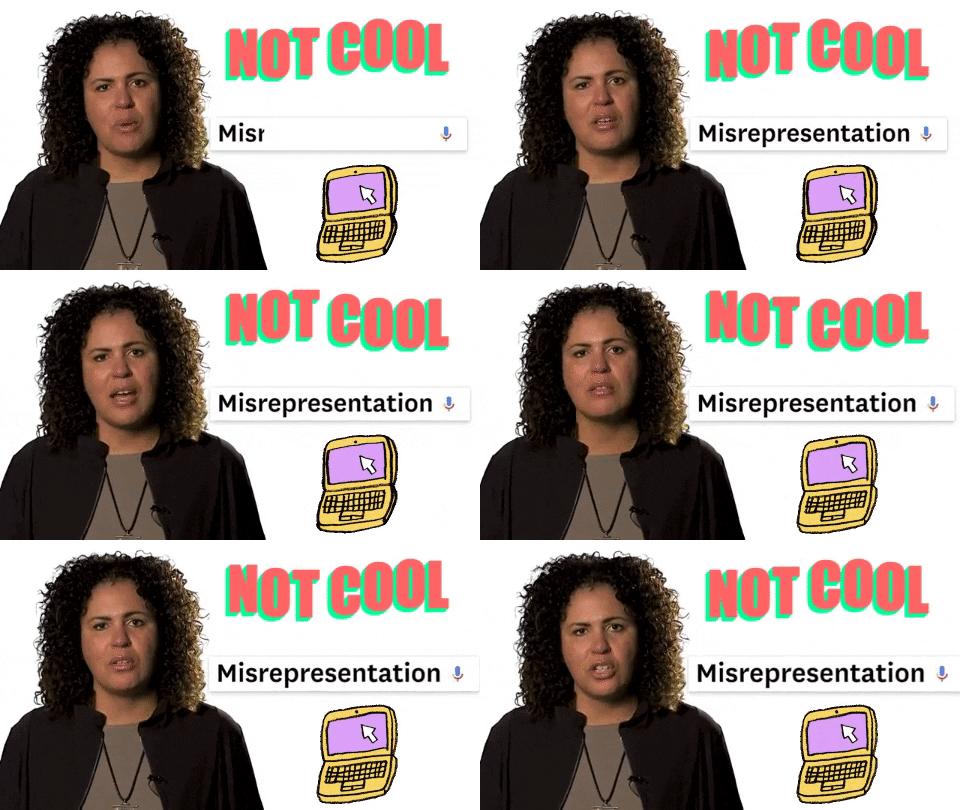
“Briefly describe how Google Searches about Black Girls have changed overtime.”–a question that was posed on one of our homework assignments of this week. In response, as stated by Safiya Umoja Noble, author of Algorithms of Oppression, “if you were to type anything about ‘Black Girls’ into google, among the first couple of search results you would see would have something to do with porn”. At first thought it may seem surreal, but based on our own research, Noble’s statement is far from false. When searching “Black Girls” in our web browser, the first thing that we were met with were sites that read “sexy black girls” or “black girl dating”. Although not necessarily porn, these search results still held subtle dehumanizing and discriminatory characteristics. Granted, as addressed by Noble, pornographic results have reduced as time has gone on, but in the span of two years following her initial search, they remained the same. Soon enough, they were gone, but the erasure of these results were very abrupt.
How did that happen?
Discriminatory behavior on search engines isn’t a recent phenomenon. They’ve existed forever, and it is because of algorithms that we have endured this. Algorithms, or a process or set of rules to be followed in calculations or other problem-solving operations, can be dangerous if not corrected, especially when digital. Although this idea of a set of rules designed to control a computer may seem like an easy concept to grasp, that is definitely not the case. It can be difficult to understand the inter-working of algorithms because they are intricate mathematical formulas.
As proven earlier, there are several instances of discriminatory behavior in algorithms. This is commonly referred to as algorithmic oppression. Algorithmic oppression describes cases when such algorithmically driven data failures are specific to people of color and women, underscoring the structural ways that racism and sexism are fundamental.
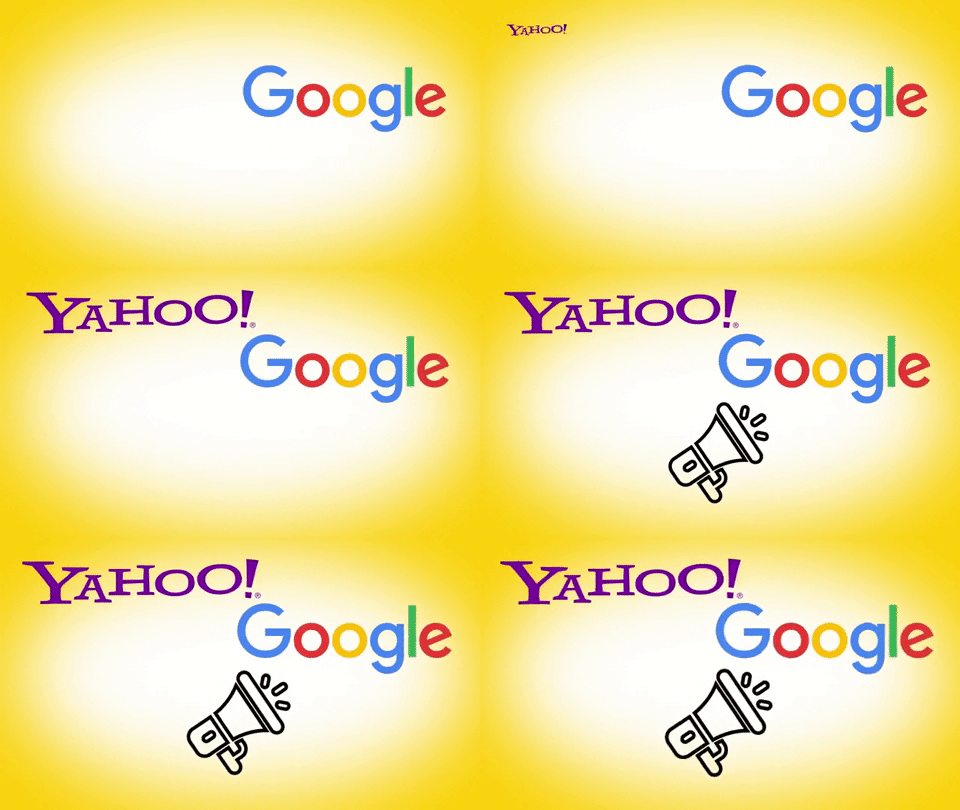
People across the nation are taking steps to stop this idea of algorithmic oppression. In 2013, the UN launched a campaign directed by the advertising agency Memac and Ogilvy & Mather Dubai using “genuine Google searches” to bring attention to the sexist and discriminatory ways in which women are regarded and denied human rights. By launching this campaign, they discovered how far we are from achieving gender equality. Not only did this project show the discriminatory nature of the searches, but it also showed just how powerful the nature of search engine results are.
To harm is to hurt. But how do the Internet and harm have anything to do with each other? Does the Internet cause more harm than good?
The Internet is a wonderful tool that allows for people from all around the globe to spread and share information. News travels fast. Unfortunately, not all of the information is true. The consequences that come from the spreading of fake news, or when somebody messes up, are extremely harmful.
According to an article on MarketWatch, it is said that false news stories are 70% more likely to be retweeted on Twitter than true ones.
When a fake news story appears on someone’s feed, it usually grabs their attention. But what are the negative outcomes that arise from these types of stories?

For the reader, they are becoming manipulated by the information that is being given to them. Donald Trump is no stranger to the fake news scene; in fact, some would argue he almost invented the term.
Trump takes to Twitter quite often, and Tweets out statements that are blatantly wrong. Below are some of his wackiest Tweets about fake news, spreading fake news.
Crazy Joe Biden is trying to act like a tough guy. Actually, he is weak, both mentally and physically, and yet he threatens me, for the second time, with physical assault. He doesn’t know me, but he would go down fast and hard, crying all the way. Don’t threaten people Joe!
The new Fake News narrative is that there is CHAOS in the White House. Wrong! People will always come & go, and I want strong dialogue before making a final decision. I still have some people that I want to change (always seeking perfection). There is no Chaos, only great Energy!
After having written many best selling books, and somewhat priding myself on my ability to write, it should be noted that the Fake News constantly likes to pore over my tweets looking for a mistake. I capitalize certain words only for emphasis, not b/c they should be capitalized!
Those who read his Tweets either agree or disagree. Along with those Tweets, Trump is known for spitting out false information. By doing so, he is causing a lot of harm.
People who believe everything that comes out of his mouth are receiving false information, and that is harmful to society as a whole.
Over the past few years, politics has been greatly impacted by fake news. CBS News discusses the impact of fake news on politics in a YouTube video.
Although fake news can be harmful, it can also be used for humor.
The Onion, a very popular website, uses satire to create funny fake news stories. But what happens when someone believes a headline?
When The Onion declared North Korean leader, Kim Jong Un, the “sexiest man alive for 2012,” the a Chinese online news site took it seriously.
The Chinese site that published the story added a 55 page photo gallery of Kim Jong Un, but was no longer available after they realized the story was satire.
Although the Internet causes harm, it does do us a lot of favors. What do you think? Do you think the Internet causes more harm than good?
Clickbait. A new and popular way to attract attention to one’s advertisement by portraying extremely interesting, yet mostly misleading, information.
The use of clickbait on news sites, YouTube videos, and other platforms, has been steadily increasing over the past few years.
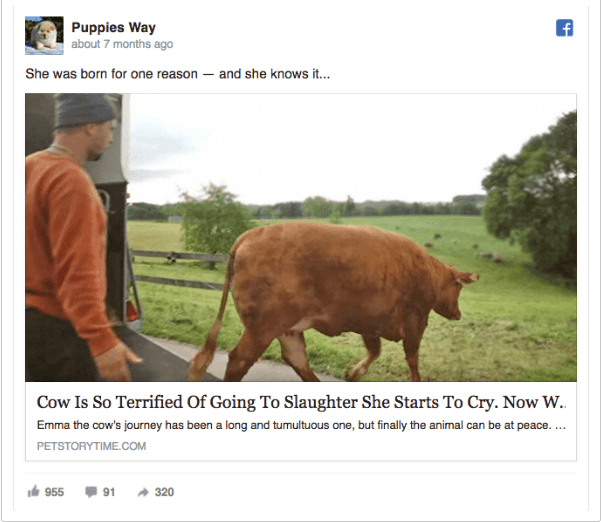
Usually, Facebook has ads that tug at your heartstrings, and make you want to learn more.
This ad, for example, is one of those “tug at your heartstrings” posts. Don’t you have the urge to click on it? This clever ad is meant to make the consumer feel empathetic for the cow.
YouTube clickbait is not only crazy, but usually misleading. YouTubers attempt to make their videos appear the most appealing by capitalizing certain words (or all of them) in their video titles, editing their thumbnails in a crazy fashion, and using a lot of “!!!” or “????”.
LOL when videos about you loving your faves don't get enough views so you rely on your good buddy clickbait over and over again to get them views. pic.twitter.com/MYh8pzsHaK
— Tasnim 🐱#EverybodyReady? #Fancy (@pandamon514) April 26, 2019
TheGamerFromMars, a Youtuber with over 660,000 subscribers, posted a well-thought out video about the different types of YouTube clickbait.
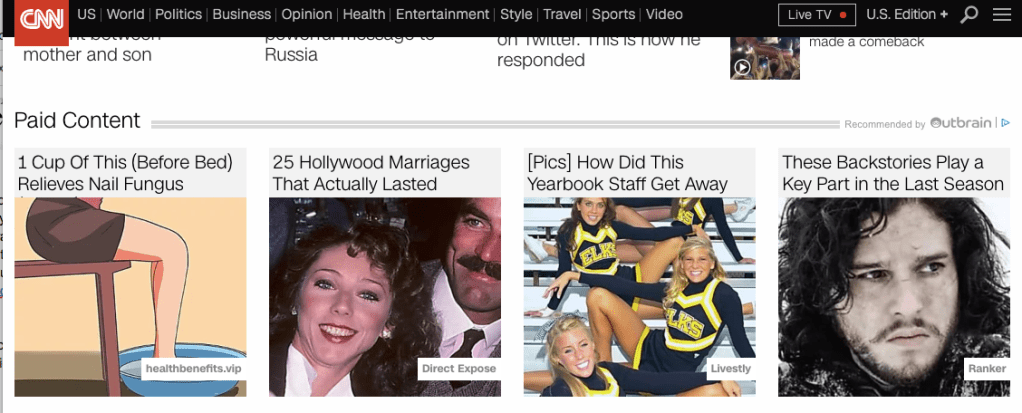
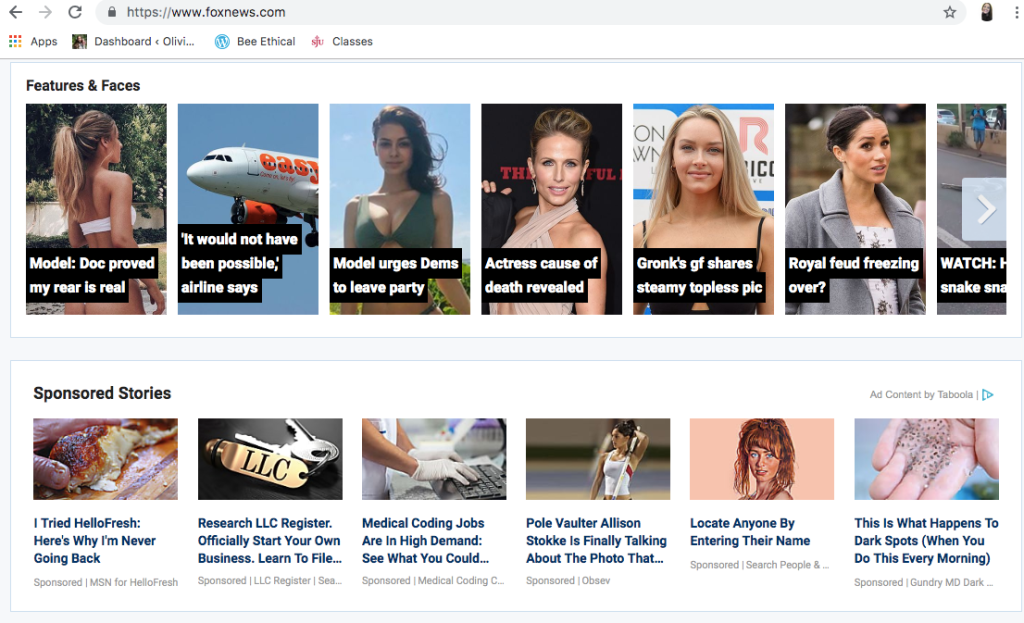
Clickbait has not only shaken up social media, but the journalism scene as well. Popular news sites like CNN and Fox News use clickbait advertisements at the bottom of their site pages.
Although clickbait in journalism in becoming more prevalent, so are the publications of fake news.
Fake news is different from clickbait – fake news has the intent to spread something that the author knows is untrue. Clickbait is dramatically advertising for the purpose of clicks and/or views.
Saw this on FB, fuck the daily mail and their clickbait, there was no 'demand' pork was taken off as a fucking business decision, there isn't some angry Muslim community screaming "death to Western fast food outlets" pic.twitter.com/k9BElqUSAR
— First World Problem Child (@BringerOfFlames) April 26, 2019
When clickbait and journalism collide, there are some interesting results that come from it. It seems as if the importance of the story itself is going away, and the desire for more clicks and views is becoming the main focus.
BBC discusses a case where a magazine pays its writers $100 a month, and $5 per every 500 clicks they get on their stories. Is that right and just?
Do you think Clickbait is taking over? Where have you seen Clickbait advertising? Let us know your thoughts!
“I did not tweet this with malice, and I did not intend to libel Lord McAlpine. I was being conversational and mischievous, as was so often my style on Twitter.”
Sally
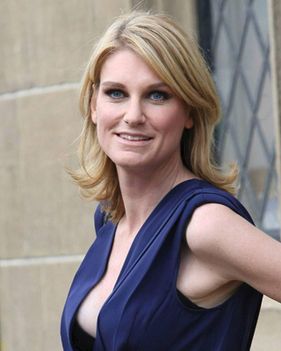
According to BBC, Sally Bercow–wife of Commons Speaker, John Bercow–tweeted that conservative Lord McAlpine was linked to sexual assault. She made this accusation following the BBC Newsnight, where he was additionally wrongly accused of sexual assault. She tweeted and voiced her disapproval of the outcome of his ruling, with no factual evidence to support her assertion.
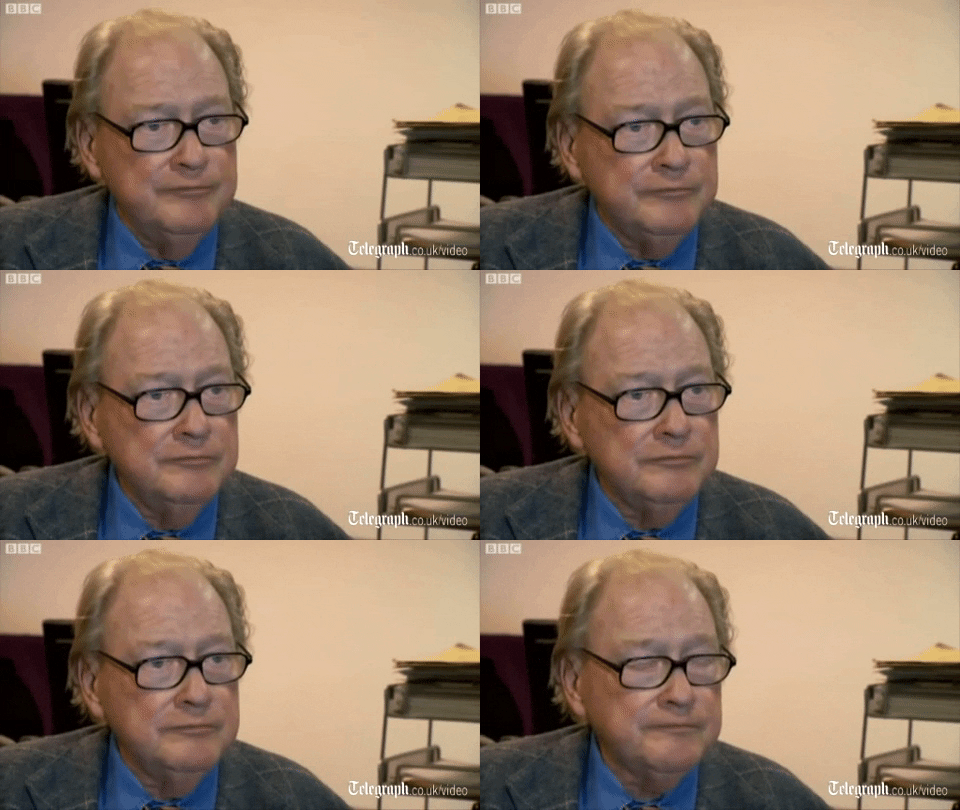
Credit: The Telegraph
Despite being previously cleared of these accusations of sexual abuse, Lord McAlpine still received loads of backlash after they were made. Her tweets were both inappropriate and slanderous. This bashing of his character from various accounts on Twitter is commonly referred to as a Twibel Case
This all began when BBC openly apologized to Lord Alpine and settled his defamation claim to €185,000. Then, Sally Bercow tweeted an ironic tweet with an “innocent face”, implying that she knew something that both the court and BBC didn’t. She asserted to her 50,000 Twitter followers that he was guilty of sex abuse on minors and convinced them that he was a pedophile, when there was evidence that he clearly wasn’t.
Credit: contactmusic
Although Sally Bercow apologized for her actions and the additional distress she’d caused to Lord Alpine and his family, it appears inauthentic in the way that she brushes it off by stating that Twitter is not supposed to be taken seriously. She even asserts that she plays around on the site in ways similar to everyone else, saying: “I did not tweet this with malice, and I did not intend to libel Lord McAlpine. I was being conversational and mischievous, as was so often my style on Twitter.”
She also said that she learned about tweeting smart and how an innocent thing can turn defamatory even when that may not necessarily be one’s intent. What heightens the burn is that Sally shared this with over 50,000 people, and that does not include those who the tweets may have been shared to. This not only prompted them to continue tweeting about the situation at hand, but also led to the spread of false information about a powerful individual, leading to the defamation of their character. At first, Lord McAlpine wanted to fine every Twitter user who tweeted or interacted with Sally’s tweet because of the defamatory nature, but he later decided to encourage any twitter user with 500 followers or over to donate to children in need. (The Guardian)
Here are some tweets in response to Bercow’s actions.
Sally Bercow has put a poster in window of her car parked in Westminster saying: Bollocks to Brexit.' A new low even by her standards
"Twitter is not just a closed coffee shop among friends. It goes out to hundreds of thousands of people and you must take responsibility for it. It is not a place where you can gossip and say things with impunity." – Lord McAlpine's solicitor. 🧐 #mccannpic.twitter.com/MQlYRv4lmu
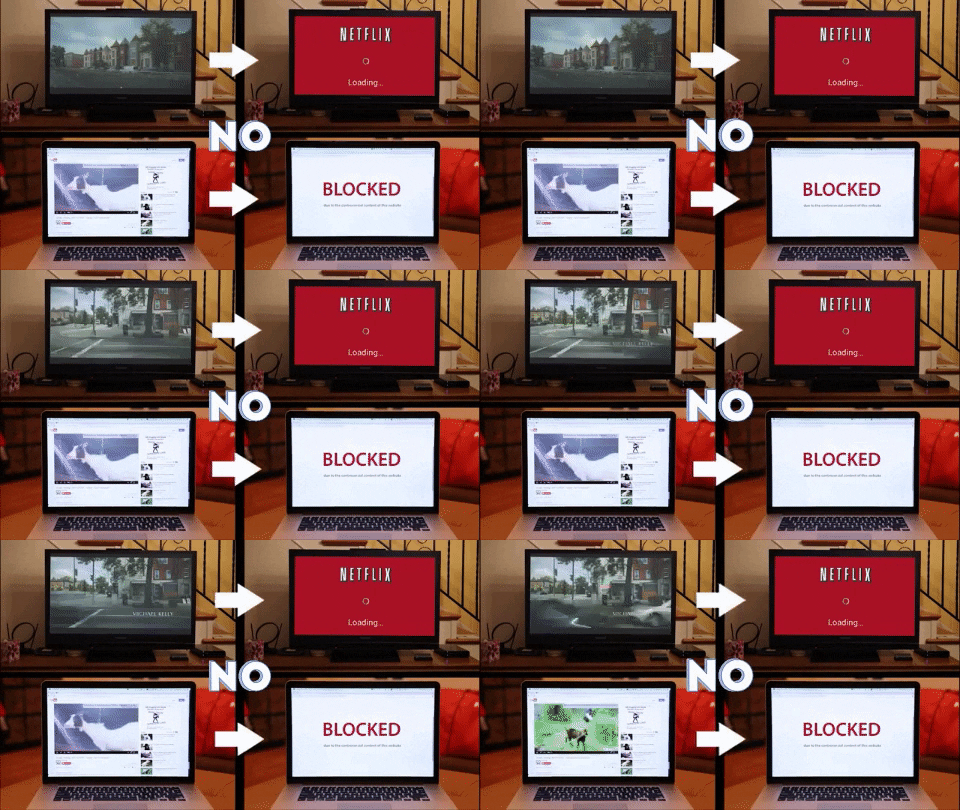
What is Net Neutrality? In recent years, this term has been loosely circulating throughout social media and other internet services, but do you know what it really means? Here’s a brief rundown of Net Neutrality.
Maybe this will simplify it
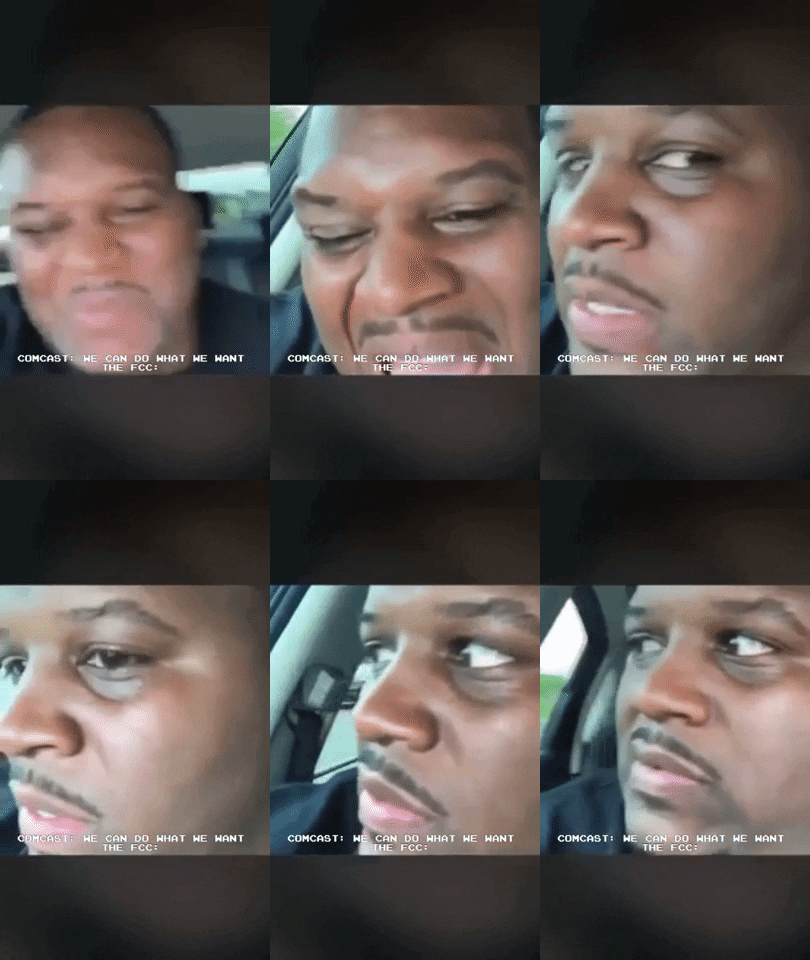
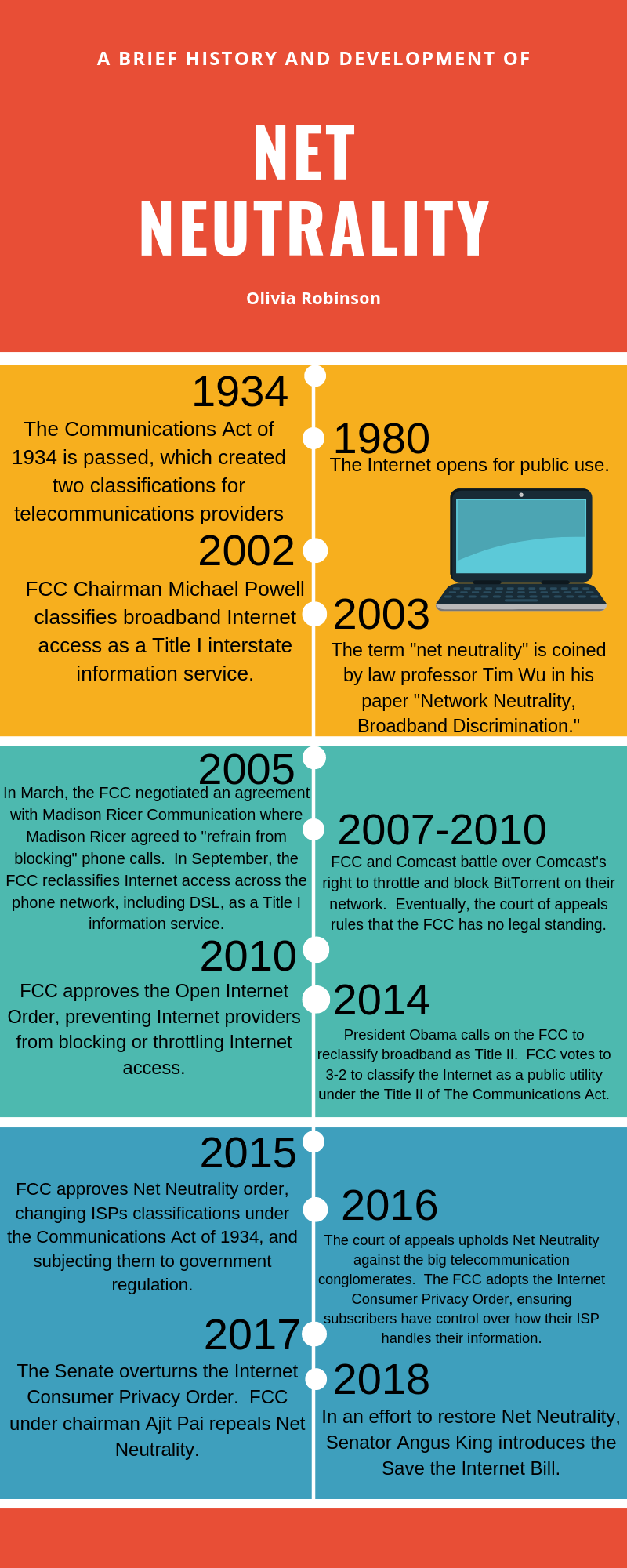
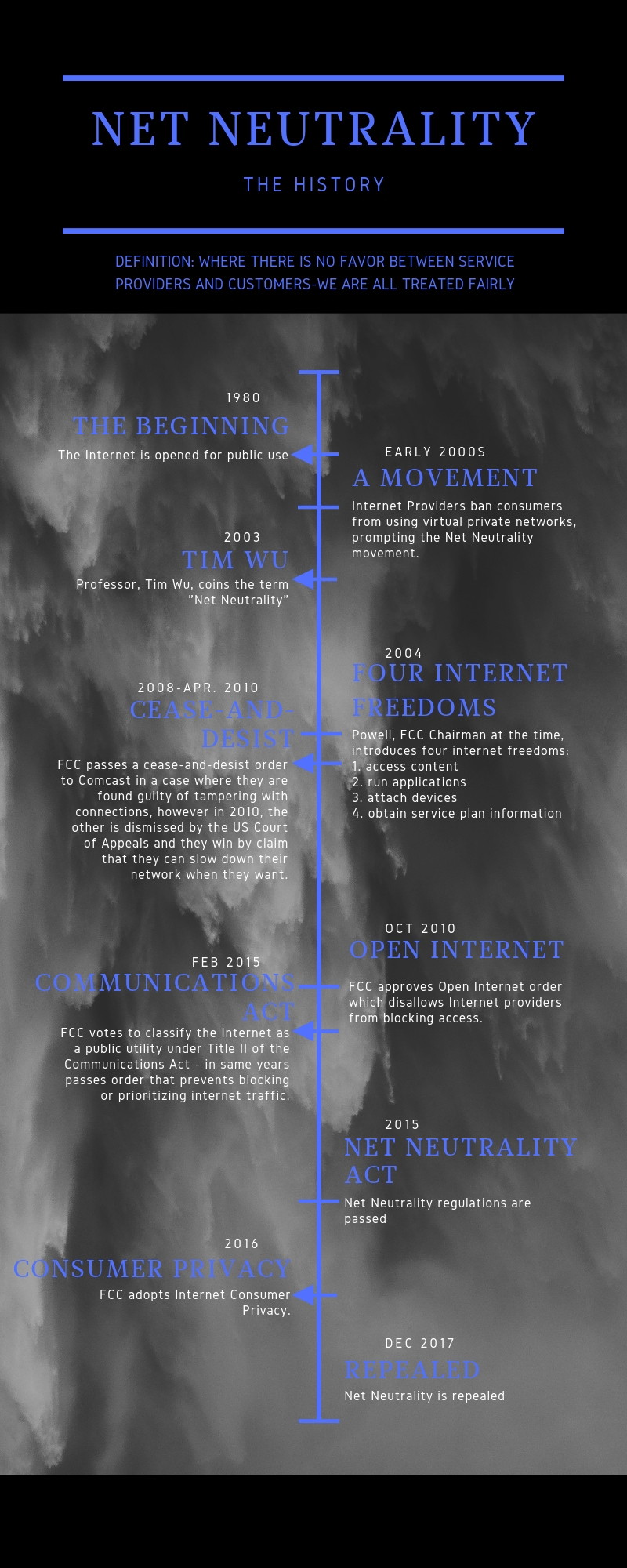
As stated within the video, Net Neutrality has and will always be an essential topic in regards to the internet and open-use. It can best be defined as a system that disallows internet providers from manipulating and blocking websites. In other words, it enables full access to content online. That is why social media sites, like Instagram and Twitter, or websites in general are at our full disposal as citizens within this country. Net Neutrality promotes open use and protects our right to freedom of speech and right to information. For that reason, the FCC (Federal Communication Commission) has found Net Neutrality essential and without it, our rights can potentially be compromised. Prior to its recent repeal (2016), there have been several instances of controversy between ISPs (Internet Service Providers), like Comcast or Verizon, and the FCC–especially considering the providers’ attempts to repeal open-use by charging additional fees for specific website access, as well as slowing their service for certain customers. In a sense, they are blocking and throttling Internet use, which defies two of the five net neutrality rules upheld within the 2015 Open Internet Order.
Despite its repeal, it is important that we recognize what is at stake if we allow service providers full control over our internet use. We, as citizens within this country, should be allowed full access to our resources. Without such, our rights are being compromised. Open Internet allows us the freedom to maintain the full experience of using the internet without interference or manipulation. If that is stripped away, then so is a fraction of our constitutional rights.
Net Neutrality, to me is this idea of a completely open internet. An internet that allows for research and exploration, an internet that fosters an environment of productivity and education. In recent years, there have been efforts to alter the accessibility of our open internet. In recent years, there have been efforts to block certain websites and threaten to make we, the consumers pay for what is rightfully ours, for free. In this post, I will explain the importance of net neutrality and how it is every American’s obligation to fight for net neutrality, as well.
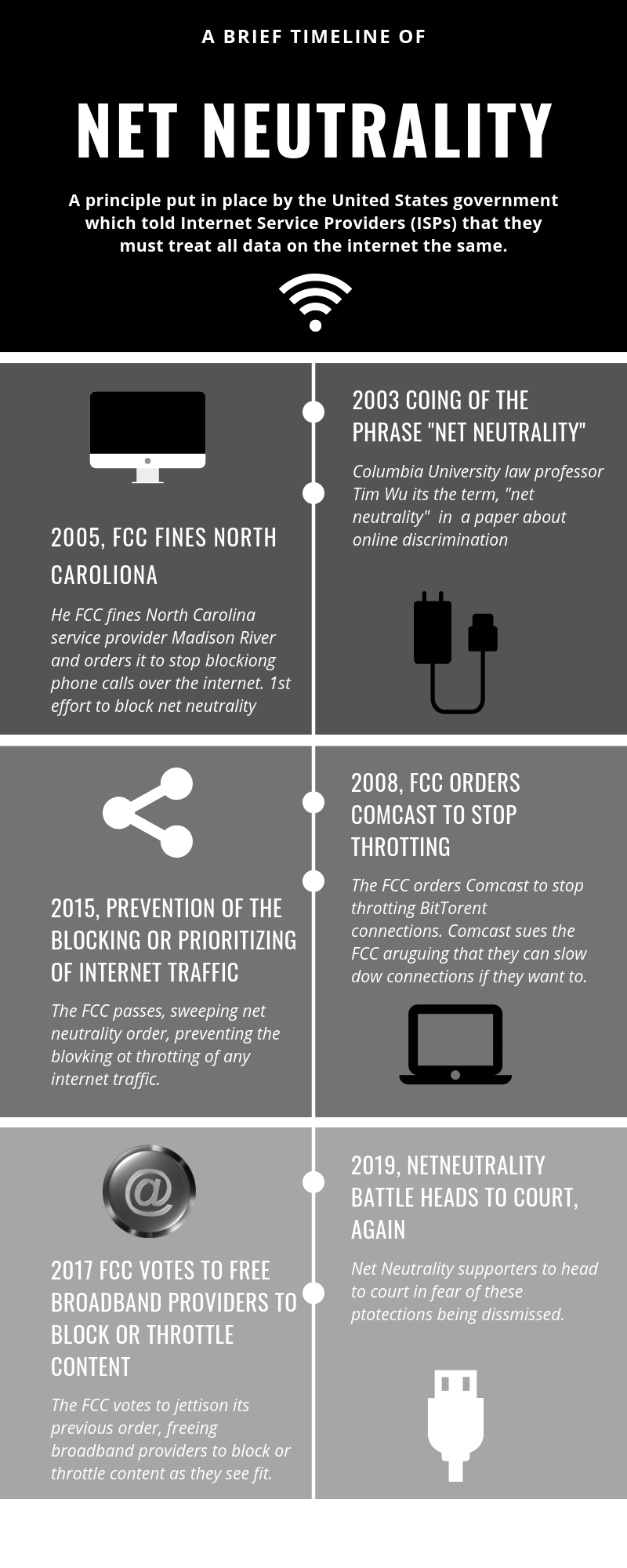
In more technical terms, net neutrality is a principle put in place by the United States government which told Internet Service Providers (ISPs) that they must treat all internet traffic the same. The importance of net neutrality and the importance of preserving gained attention ing 2003. In 2003, Columbia University law professor, Tim Wu coined the phrase in a paper he wrote about online discrimination. Form then on, it has been a rocky road as ISPs have been making efforts to tamper with our free, open internet.
In 2005, the Federal Communications Commission (FCC) North Carolina service provider, Madison River, who had been blocking and throwing certain things on the internet. This was essentially the first time ISPs began to stop net neutrality. And it hasn’t stopped since. In 2008, the FCC calls on another, perhaps more popular ISP to stop throtting. Yes, this time it’s Comcast for slowing down connection because they’re greedy and because they can. In 2015, there FCC tries, yet again to blocking and prioritizing internet traffic, and in 2017, they vote to free broadband providers to block or throt content as they see fit. And now, in 2019, battle to preserve net neutrality continues. Net neutrality supporters are heading back to court to in fear of these protections being dismissed.
Internet providers must be required to treat all Web traffic equally. It’s also critically important that we invest in making broadband service available to everyone, including our rural communities. Proud to support #NetNeutrality. https://t.co/PsxTKbfCwo
It is imperative to maintain an open internet because it’s really how we connect. It could be connecting in any way, with each other or with something you are researching. I cant imagine a world without net neutrality, I don’t want to. I shouldn’t have to.
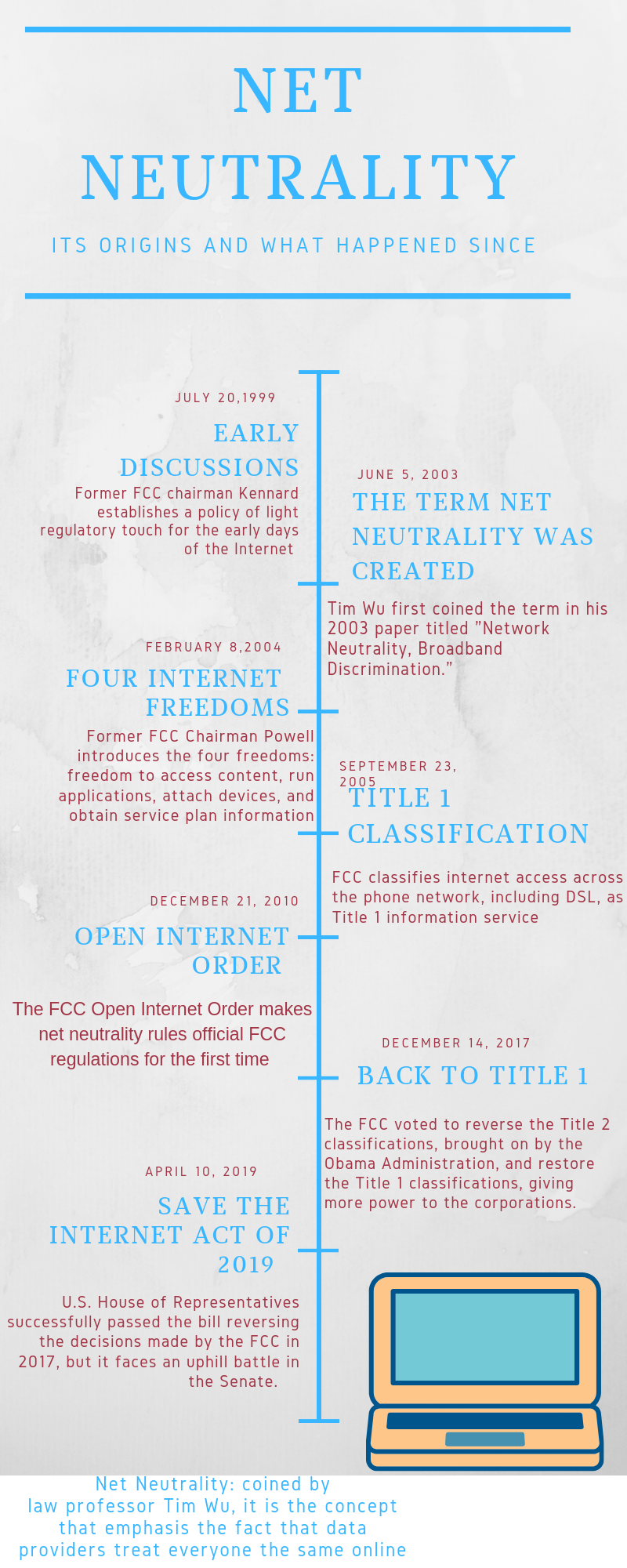
Although the bill will bring back net neutrality and reverse the decisions made by the FCC, it still faces an uphill battle going into the Senate and possibly the White House. What do you think of net neutrality? Should Congress enact this law or not?