By, Makiah Stephens
What is Net Neutrality? In recent years, this term has been loosely circulating throughout social media and other internet services, but do you know what it really means? Here’s a brief rundown of Net Neutrality.
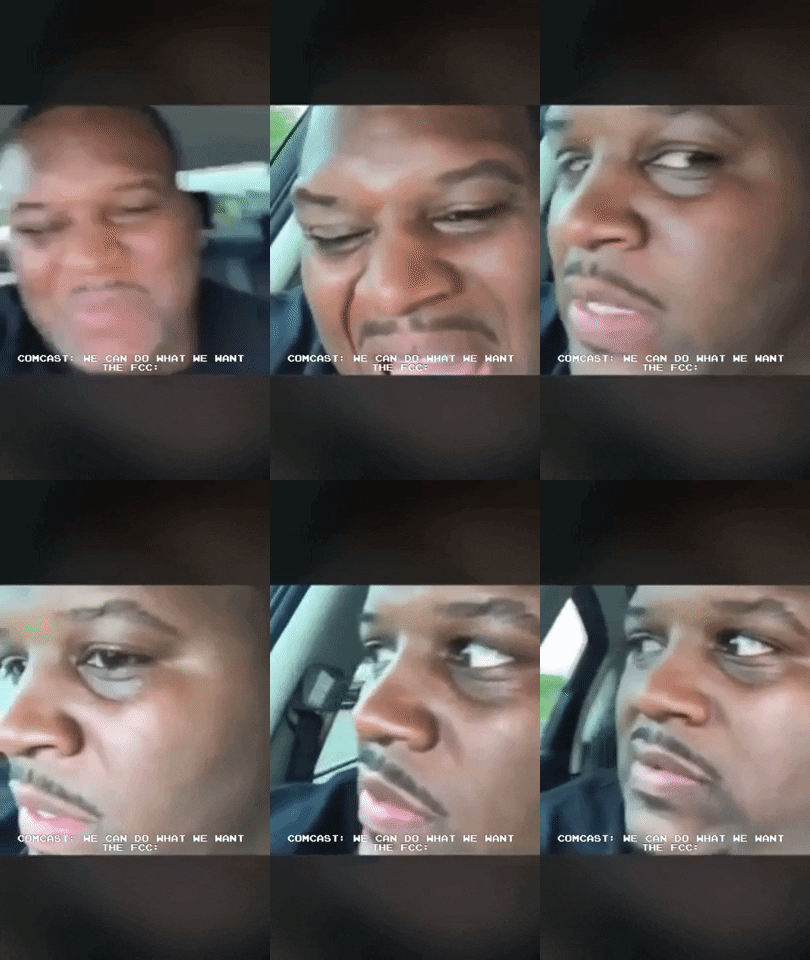
Maybe this will simplify it
As stated within the video, Net Neutrality has and will always be an essential topic in regards to the internet and open-use. It can best be defined as a system that disallows internet providers from manipulating and blocking websites. In other words, it enables full access to content online. That is why social media sites, like Instagram and Twitter, or websites in general are at our full disposal as citizens within this country. Net Neutrality promotes open use and protects our right to freedom of speech and right to information. For that reason, the FCC (Federal Communication Commission) has found Net Neutrality essential and without it, our rights can potentially be compromised. Prior to its recent repeal (2016), there have been several instances of controversy between ISPs (Internet Service Providers), like Comcast or Verizon, and the FCC–especially considering the providers’ attempts to repeal open-use by charging additional fees for specific website access, as well as slowing their service for certain customers. In a sense, they are blocking and throttling Internet use, which defies two of the five net neutrality rules upheld within the 2015 Open Internet Order.
Despite its repeal, it is important that we recognize what is at stake if we allow service providers full control over our internet use. We, as citizens within this country, should be allowed full access to our resources. Without such, our rights are being compromised. Open Internet allows us the freedom to maintain the full experience of using the internet without interference or manipulation. If that is stripped away, then so is a fraction of our constitutional rights.

 Bee Ethical