Clickbait. A new and popular way to attract attention to one’s advertisement by portraying extremely interesting, yet mostly misleading, information.
The use of clickbait on news sites, YouTube videos, and other platforms, has been steadily increasing over the past few years.
Usually, Facebook has ads that tug at your heartstrings, and make you want to learn more.
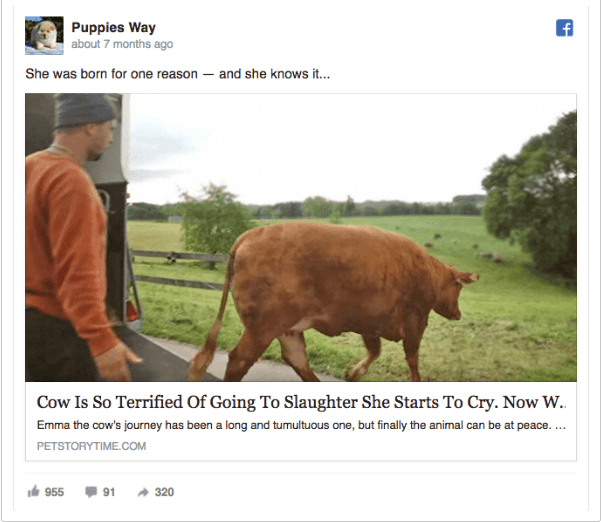
This ad, for example, is one of those “tug at your heartstrings” posts. Don’t you have the urge to click on it? This clever ad is meant to make the consumer feel empathetic for the cow.
YouTube clickbait is not only crazy, but usually misleading. YouTubers attempt to make their videos appear the most appealing by capitalizing certain words (or all of them) in their video titles, editing their thumbnails in a crazy fashion, and using a lot of “!!!” or “????”.
TheGamerFromMars, a Youtuber with over 660,000 subscribers, posted a well-thought out video about the different types of YouTube clickbait.
Clickbait has not only shaken up social media, but the journalism scene as well. Popular news sites like CNN and Fox News use clickbait advertisements at the bottom of their site pages.
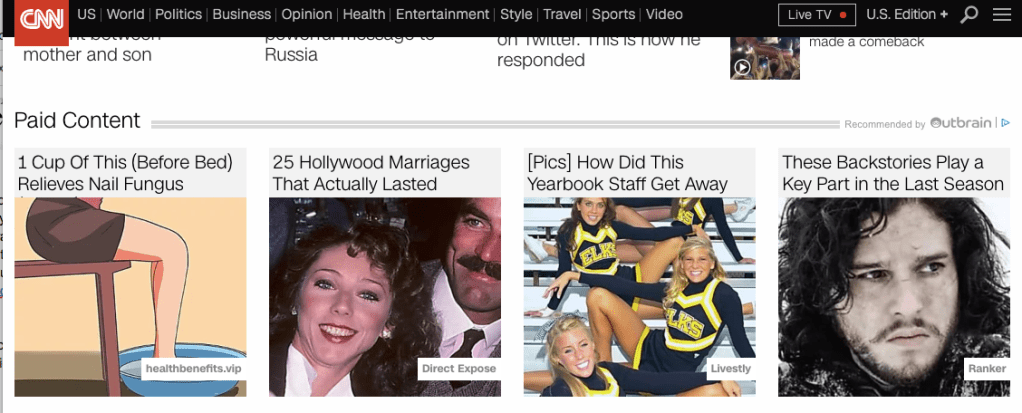
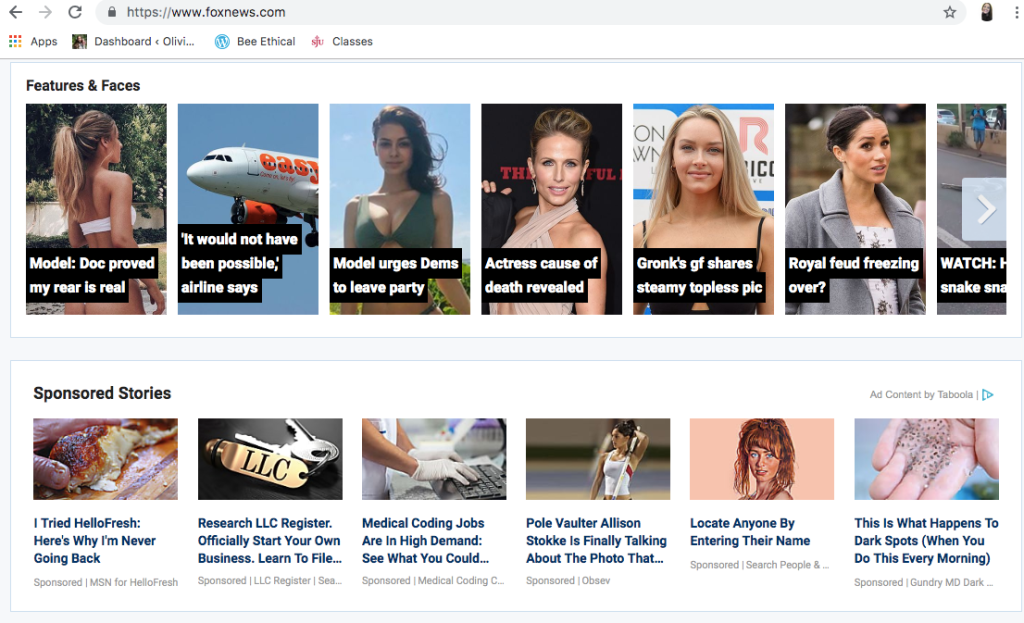
Although clickbait in journalism in becoming more prevalent, so are the publications of fake news.
Fake news is different from clickbait – fake news has the intent to spread something that the author knows is untrue. Clickbait is dramatically advertising for the purpose of clicks and/or views.
When clickbait and journalism collide, there are some interesting results that come from it. It seems as if the importance of the story itself is going away, and the desire for more clicks and views is becoming the main focus.
BBC discusses a case where a magazine pays its writers $100 a month, and $5 per every 500 clicks they get on their stories. Is that right and just?
Do you think Clickbait is taking over? Where have you seen Clickbait advertising? Let us know your thoughts!

 Bee Ethical